
PEEK Rods & Round Bars
Specify diameter, cut length, PEEK grade and machining allowance for your next part. Stock dimensions and material documentation are confirmed at quotation.
Request PEEK Rod Quote →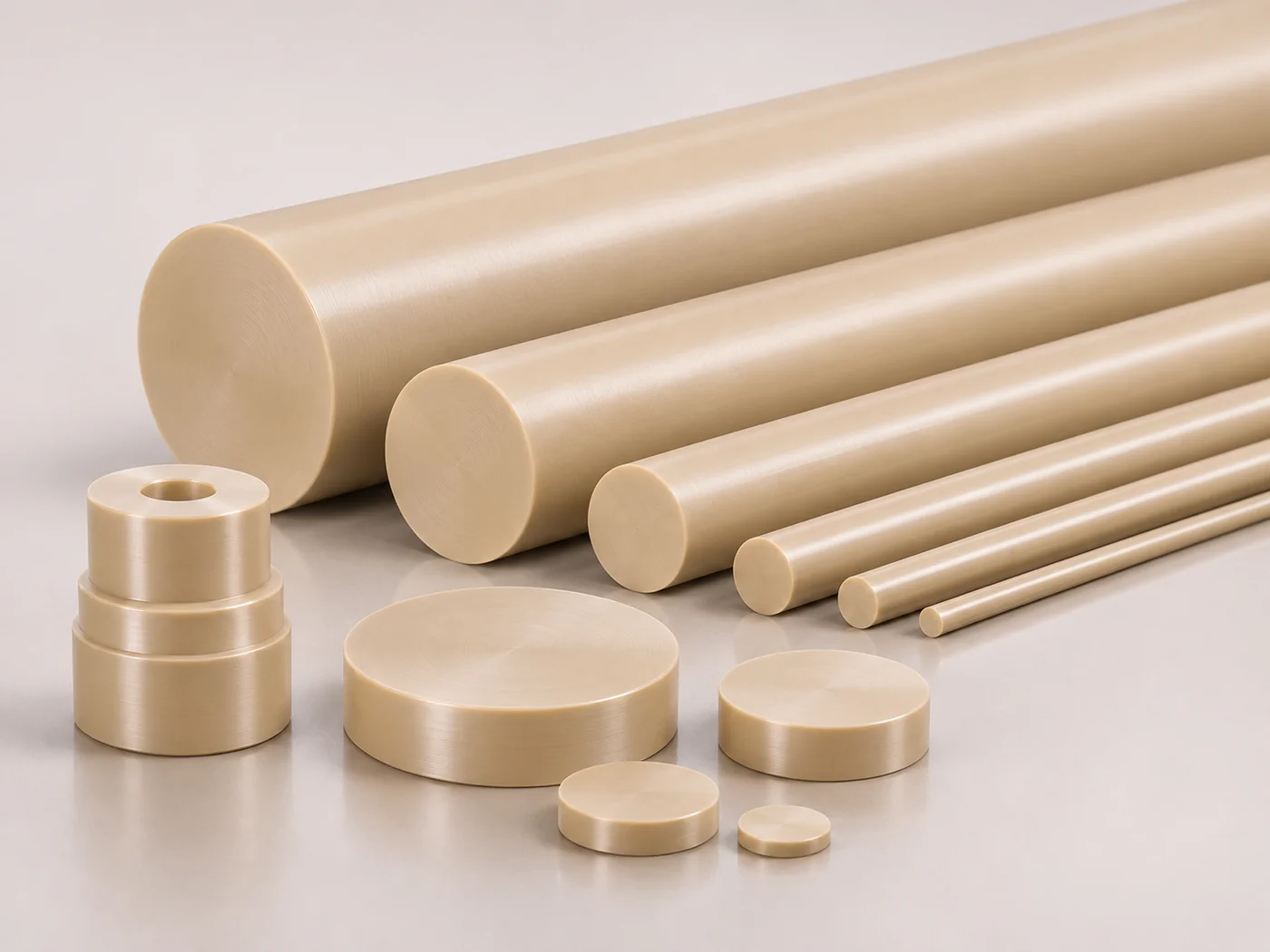 Illustrative 3D product rendering
From round stock to accurate turned blanks.
Identify the product form, required grade and intended use before confirming material selection or production scope.
Buy rod stock for turning, sleeves and precision parts.
For rods, a diameter alone does not tell a machining supplier whether the stock is suitable. The selected PEEK grade, diameter oversize, straightness, cut length, stock processing method and documentation all affect downstream turning.
- Natural / unfilled PEEK rod for general machining requirements
- Glass-filled or carbon-filled grades for application-specific review
- Cut-to-length blanks and machined finished-part RFQs
Illustrative product renderWhat to include in the purchase specification.
Confirm the required dimensions, material grade and quantity for an accurate quotation.
| RFQ input | What to specify and why it matters |
|---|---|
| Diameter (ØD) | Nominal bar diameter in mm or inches; define minimum machining allowance and diameter tolerance if critical. |
| Length (L) | Required cut length, piece count, saw-cut allowance, end squareness and any deburring requirements. |
| Material / color | Exact resin or stock-shape grade, natural or black, filler content and allowed substitutions. |
| Stock processing route | Ask whether extruded, molded or otherwise produced stock is required; material condition may affect machining. |
| Functional considerations | Service temperature, chemical contact, sliding surfaces, electrical needs and part geometry after turning. |
| Documents & packing | TDS, material traceability, identification labeling, protective packaging and inspection agreed before quotation. |
Dimensions, grades and availability are confirmed for each quotation.
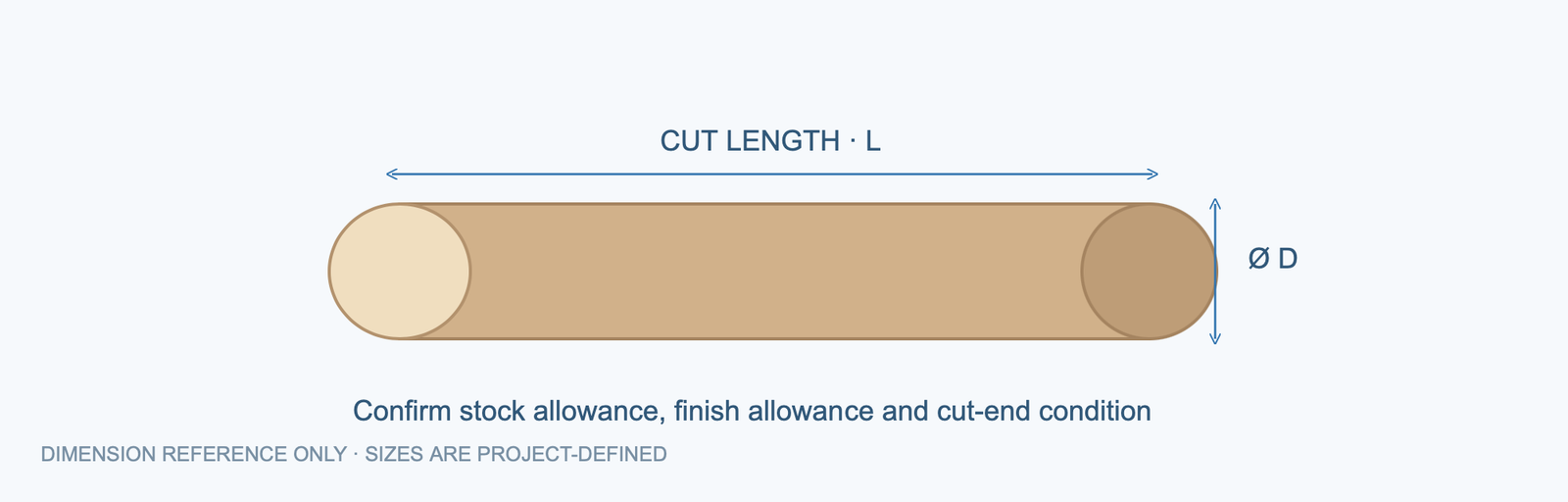
Rod diameter and cut length: two different tolerances.
Use this dimension sketch to make your first inquiry complete. Confirm all tolerances, fit requirements and acceptance criteria on your own drawing.
Choose a rod grade and cut form that fit the finished part.
Product-specific guidance to help engineers and buyers avoid a quotation that looks attractive but is technically incomplete.
Cut near the finished geometry
Oversized rod is commonly selected so the final diameter can be turned cleanly. Allowances depend on stock condition and part requirements.
Virgin vs GF30 vs CF30
Fibre reinforcement changes stiffness, surface finish and tooling considerations. Request the actual manufacturer grade and datasheet.
Straightness and end finish
Long lengths and cut-end quality may affect machine loading, storage and downstream setup.
Pieces, cut lengths or full bars
Express the order as a size/quantity matrix. Indicate whether quotes should include cutting, finishing or machining.
Traceability by batch where needed
For controlled manufacturing, specify whether labels, lot identification or material documents must accompany the order.
Choose a hollow tube when suitable
For large bored rings and sleeves, near-net hollow stock may lower material waste compared with solid rod.
Rod stock, cut blanks or finished turned parts?
Select the purchasing form from the downstream machining plan; stock diameter and finished-part diameter are different specifications.
| Sourcing form | Most useful RFQ fields | Technical check | Do not assume |
|---|---|---|---|
| Full rod / round bar | Nominal diameter, usable length, grade, length quantity. | Stock straightness, material trace and handling. | Published availability or diameter tolerance. |
| Cut-to-length blank | Diameter, cut length, saw finish and machining allowance. | Cut squareness, allowance and number of pieces. | Finished-part concentricity or roundness. |
| Turned component | Finished OD/ID, datums, tolerances, finish and drawing. | Workholding, material stress and acceptance method. | That stock dimensions equal finished dimensions. |
Rod sourcing checklist.
Use this checklist to prepare your product-specific RFQ.
Check before sending your inquiry
References for material selection and stock-shape specifications. Confirm the required grade, dimensions and availability for your order.
Frequently asked questions.
Direct answers to common procurement decisions and engineering details.
What dimensions are needed to quote PEEK rod?
Provide diameter, cut length, quantity, material grade and any diameter tolerance or machining allowance.
Is GF30 the same as virgin PEEK?
No. GF30 usually denotes a nominal glass-fibre reinforcement family. Mechanical, electrical and machining behavior must be checked against the exact grade datasheet.
Can rods be cut to length?
Cut-to-length sourcing can be evaluated, but cut tolerance, available bar size and pricing must be confirmed for the requested grade.
Should I choose solid rod or hollow PEEK tube?
Solid rod suits many turned blanks; for annular components with a large central bore, hollow stock can reduce waste if a compatible size and grade are available.