
PEEK Sheets & Plates
Source PEEK plastic sheets and plates to your required thickness, width, length and grade. Define flatness, machining stock and traceability before purchase.
Request PEEK Sheet Quote →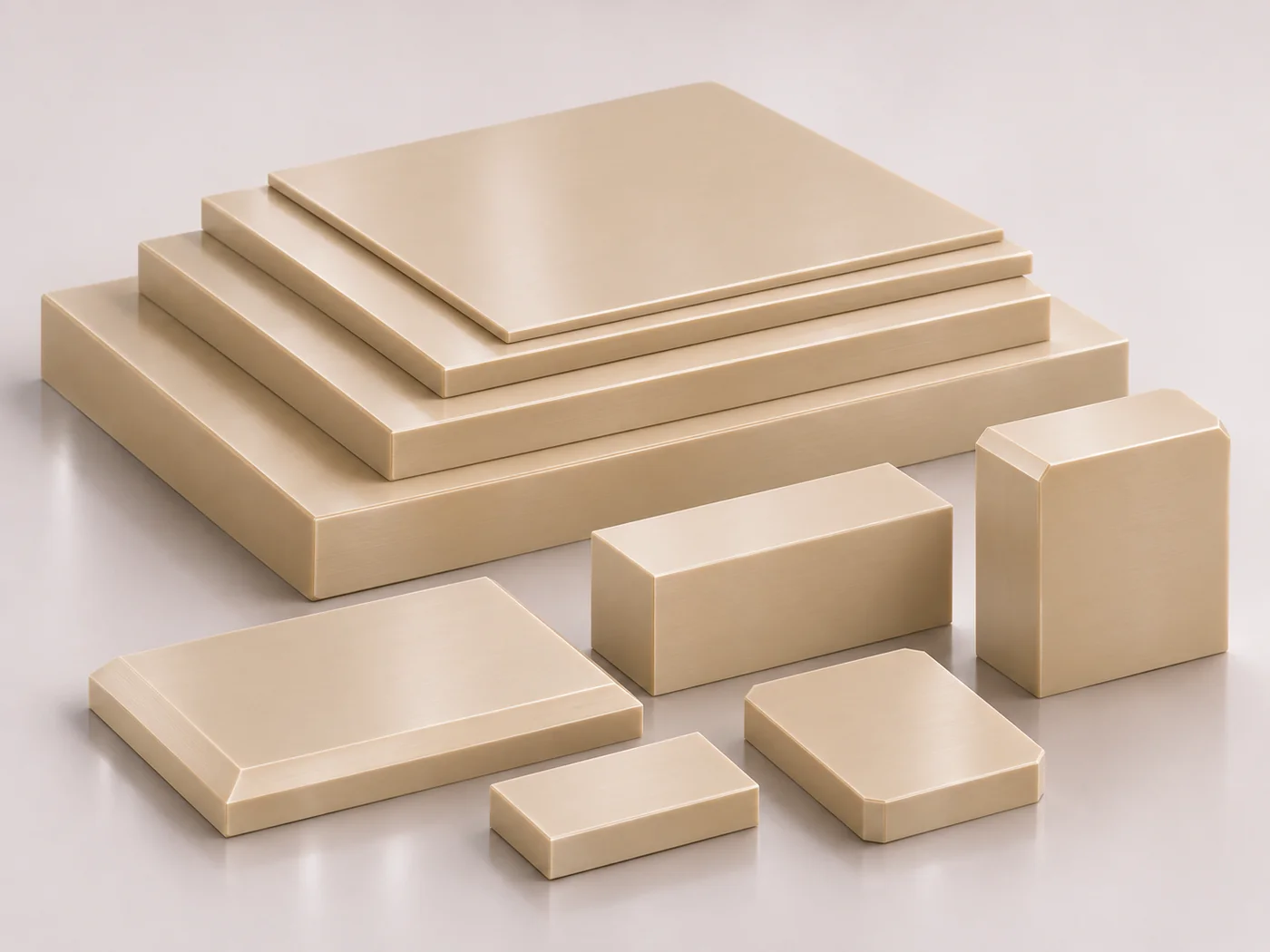 Illustrative 3D product rendering
A sheet is defined by thickness, grade and finish.
Identify the product form, required grade and intended use before confirming material selection or production scope.
Plate dimensions, stock condition and cutting scope.
Specify a sheet by thickness, length and width—not simply by “PEEK plastic”. Grade, plate condition, machining allowance and flatness may determine whether material is suitable for milled housings, fixtures or electrical parts.
- Full PEEK sheets and plates for machining
- Cut-to-size blanks for smaller machined components
- Virgin, reinforced and specialized grades subject to actual sourcing review
Illustrative product renderWhat to include in the purchase specification.
Confirm the required dimensions, material grade and quantity for an accurate quotation.
| RFQ input | What to specify and why it matters |
|---|---|
| Thickness (T) | Nominal thickness, required finish thickness and tolerance; state if material will be surface-milled. |
| Width × length | Target blank dimensions in millimeters or inches, quantity per size and edge-cut method. |
| Material grade | Virgin PEEK, GF30 or CF30 as a material family; request the exact approved commercial grade and TDS. |
| Flatness / stress | Any critical warp/flatness limit, stress-relief requirement and downstream machining plan. |
| Finish / cutting | Saw-cut vs milled faces, edge squareness, flatness after machining and protective film requirement. |
| Documentation | Material batch identification, certificates where available, visual criteria, packing and delivery details. |
Dimensions, grades and availability are confirmed for each quotation.
Record thickness separately from width and length.
Use this dimension sketch to make your first inquiry complete. Confirm all tolerances, fit requirements and acceptance criteria on your own drawing.
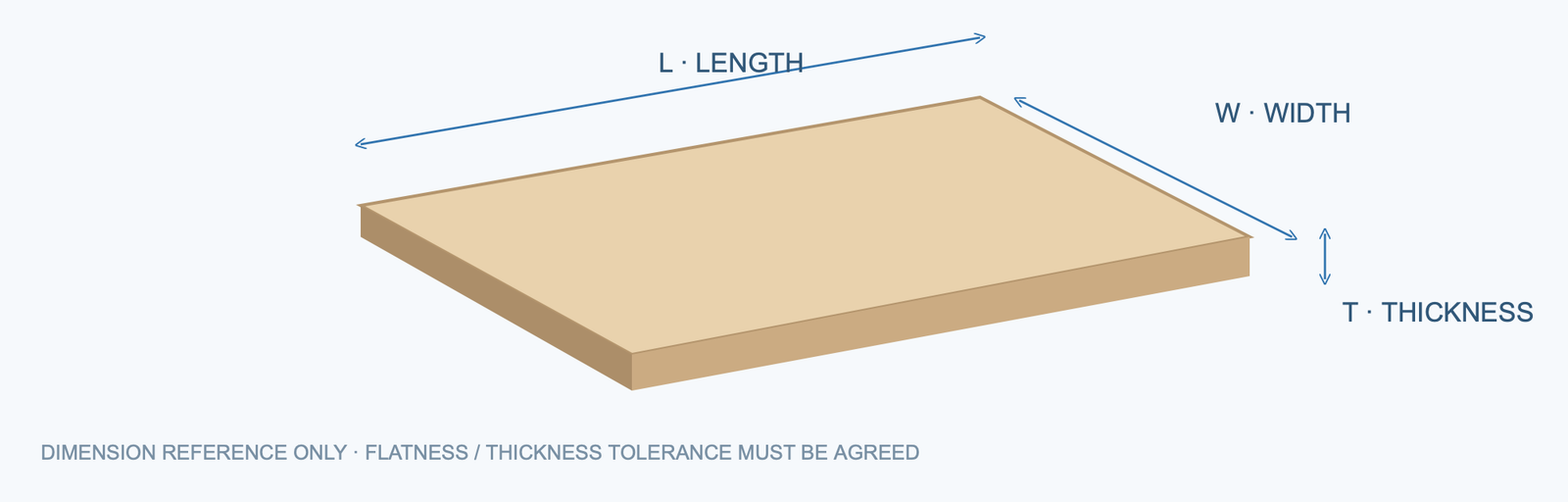
Specify a plate that is suitable for the final machining plan.
Product-specific guidance to help engineers and buyers avoid a quotation that looks attractive but is technically incomplete.
Thickness affects machining yield
Consider both raw thickness and final finish thickness. Stock plate should permit material removal and fixturing where needed.
Long, thin plates can move
Flatness and bow should be assessed by size, stock condition, temperature and how a plate will be machined.
Grade selection is application-specific
GF30 and CF30 may provide different stiffness and electrical behavior; use the approved grade datasheet.
Specify finished or raw blanks
A simple cut blank is not the same as a precision milled plate. State required edge and surface acceptance.
Plan holes, pockets and thin walls
If a plate will become a machined housing, send the final part drawing with tolerances and datum relationships.
Ask for the records you need
Specify raw material documentation, identification, lot references and inspection scope before quote approval.
Plate purchasing form × machining requirements
Large flat surfaces and one-sided machining may affect dimensional stability. Clarify whether the offer is raw stock, a cut blank or a finished part.
| Purchase form | Specify | Geometry / inspection risk | Acceptance boundary |
|---|---|---|---|
| As-supplied plate | Nominal thickness, width × length, grade, stock face condition. | Plan enough machining stock for the desired finished flatness. | Published stock tolerances require supplier confirmation. |
| Cut-to-size blank | Saw-cut dimensions, edge allowance, orientation, quantity. | Cut variation, squareness, handling and deformation. | Cut blank is not a CNC-finished plate. |
| CNC-machined plate | Finished thickness, datums, flatness, pockets/holes, final finish. | Asymmetric removal, clamping and inspection condition. | Final tolerance requires drawing and process review. |
Sheet and plate procurement checklist.
Use this checklist to prepare your product-specific RFQ.
Check before sending your inquiry
References for material selection and stock-shape specifications. Confirm the required grade, dimensions and availability for your order.
Frequently asked questions.
Direct answers to common procurement decisions and engineering details.
What is the difference between a PEEK sheet and a plate?
Terminology varies by supplier. A quotation should state the actual thickness, width, length, grade, manufacturing condition and tolerances.
What sizes of PEEK plastic sheet do you stock?
Send the required thickness, width, length, grade and quantity for availability review.
Can a sheet be cut into smaller blanks?
Cut-to-size requirements can be quoted after confirming the grade, source dimensions, requested tolerances and quantity.
Why do I need to specify flatness for a PEEK plate?
Large surface areas and thin sections may warp or move during processing. Critical flatness should be agreed for the intended state and measurement method.